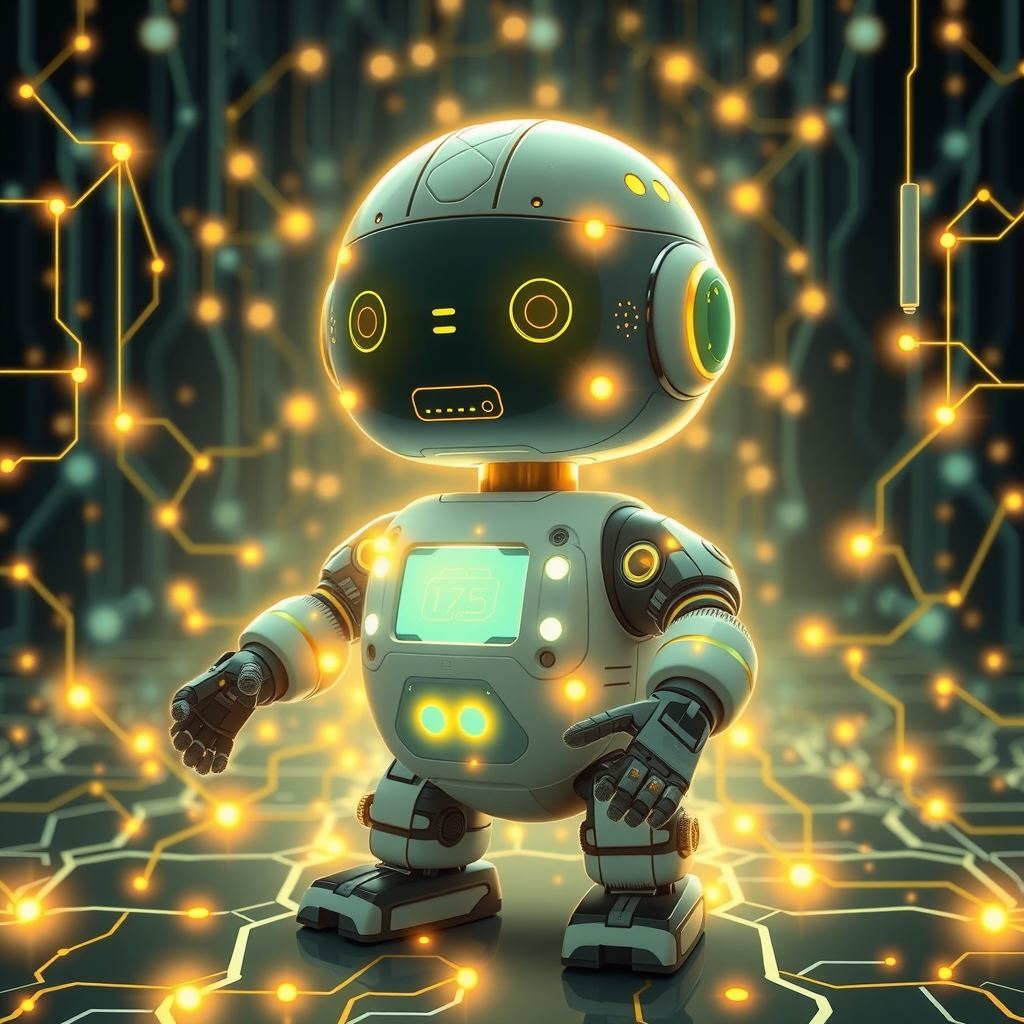
Hugging Face’s Pollen Robotics Unveils Microduck AI Robot
Pollen Robotics, a subsidiary of the AI powerhouse Hugging Face, has officially introduced the Microduck, a compact, bipedal AI robot designed to bridge the gap between consumer robotics and open-source intelligence. This pint-sized machine combines whimsical design with sophisticated sensor suites, signaling a new era of accessible, personality-driven robotics.
Meet the Microduck: Hardware and Specifications
Standing just under 10 inches tall, the Microduck is a one-eyed, bipedal robot that prioritizes both personality and functionality. Far from being a mere novelty, the device is powered by a Rockchip RK3566 processor, providing the computational backbone necessary for real-time interaction. Its hardware stack is surprisingly robust for its size, featuring a camera, motion sensors, and LiDAR technology to navigate environments effectively.
The robot features articulated legs, a head, and a neck, allowing it to perform diverse physical tasks. Early demonstrations show the Microduck performing surprisingly dexterous actions, such as picking up socks and markers, kicking balls, and zipping across surfaces on miniature rollerskates. Available in four colors—cream, graphite, lavender, and sky blue—the Microduck is currently available for preorder at $399, with shipping slated to begin before Christmas 2026.
Open-Source Intelligence and Unique Personality
In true Hugging Face fashion, the Microduck is built on a foundation of openness. Following the precedent set by the Reachy Mini robot, the Microduck’s software is fully open-source. This is a critical distinction for developers and researchers, as it allows users to retrain the robot, implement custom behaviors, and experiment with new machine learning models directly on the hardware.
Beyond its utility, Pollen Robotics is leaning heavily into "embodied AI" that feels lifelike. Instead of acting like a standard digital assistant, the Microduck communicates through a series of "weird little sounds" designed to mimic a living creature. To enhance this sense of individuality, each unit is assigned a unique audio identity upon its first activation. This means every Microduck develops its own distinct voice that remains consistent throughout its lifecycle.
Why This Matters for the AI Landscape
The release of the Microduck represents a strategic move toward democratizing robotics. By combining affordable hardware ($399) with an open-source software ecosystem, Pollen Robotics is creating a playground for the next generation of AI developers. This approach moves away from the "black box" models of proprietary robotics and toward a transparent, community-driven model where the hardware evolves alongside the software.
As LLMs and multimodal models become more sophisticated, the demand for physical embodiments—robots that can sense, move, and react in the real world—will skyrocket. The Microduck serves as a low-cost entry point for testing how AI agents interact with physical objects and human environments, making it a significant milestone in the journey toward ubiquitous, interactive robotics.
Key Takeaways
- Robust Specs for Size: Despite its small stature, the Microduck features a Rockchip RK3566 processor, LiDAR, and a camera for advanced environmental interaction.
- Developer-First Approach: The robot utilizes open-source software, allowing users to retrain the AI and customize its behaviors.
- Embodied Personality: Each robot develops a unique, permanent audio identity, focusing on creature-like communication rather than traditional assistant interfaces.