Nvidia’s Jetson Chips Set to Power the First AI Rovers on the Moon
Nvidia is expanding its silicon footprint beyond Earth’s atmosphere, targeting the lunar surface to power the next generation of autonomous space exploration. Through strategic partnerships with space startups, the AI giant is proving that high-performance computing is essential for the future of lunar infrastructure.
Bringing Physical AI to the Lunar Surface
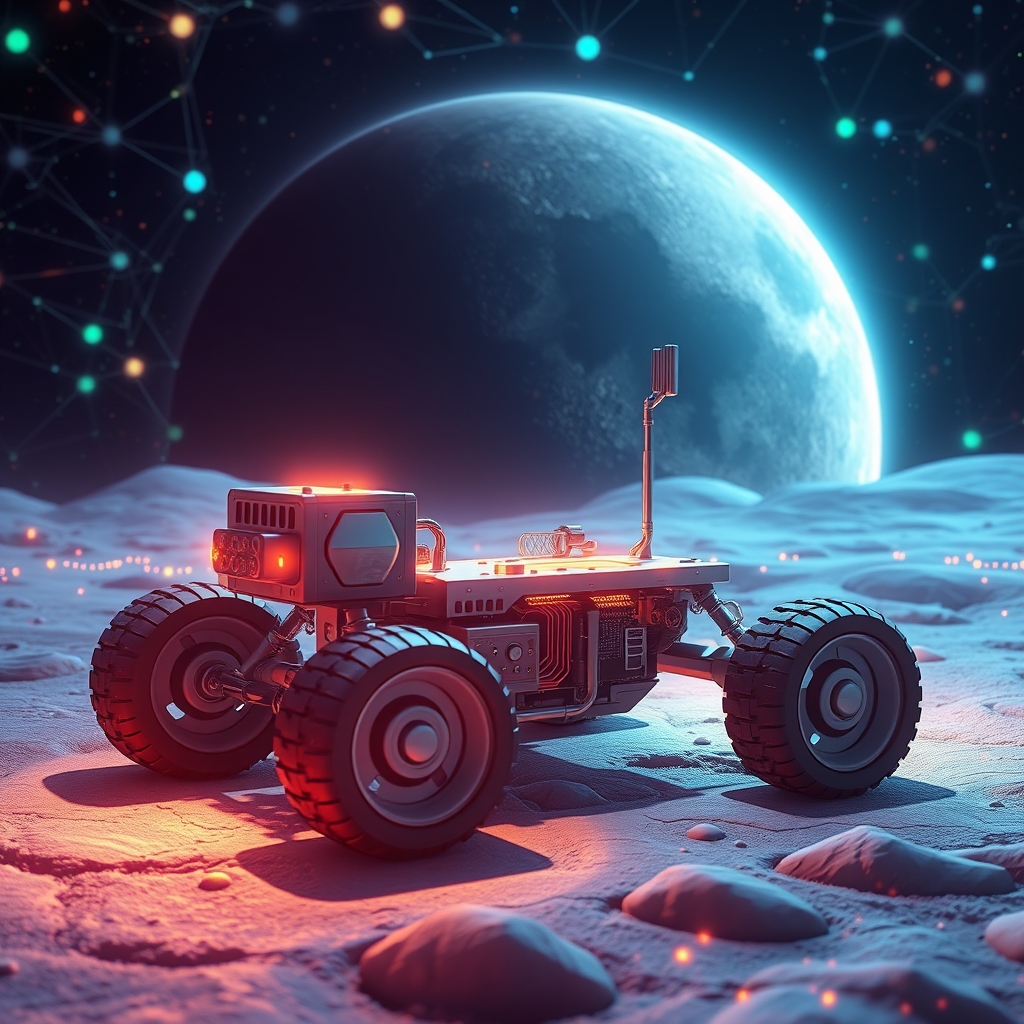
Lunar Outpost, a startup specializing in robotics for space infrastructure, has announced that its upcoming Moon rover will utilize the NVIDIA Jetson platform to control its LiDAR systems. This move positions the Jetson chip to potentially become the first GPU to operate directly on the lunar surface.
While Nvidia is widely known for its massive Blackwell and Vera Rubin architectures used in data centers, the Jetson platform serves a different, critical niche: physical AI. Designed to be compact and power-efficient, Jetson enables robotic systems to process complex sensor inputs locally. This "edge" processing is vital for space missions where real-time autonomy is required to navigate treacherous terrain without the latency of sending data back to Earth.
Strategic Partnerships and Orbital Computing
Nvidia’s lunar ambitions extend beyond surface rovers. The company has also entered a partnership with Firefly Aerospace—the first private company to successfully land a robot on the Moon. In this collaboration, the Jetson platform will operate on a satellite orbiting the Moon to process imagery. This orbital compute capability will help scientists map the lunar landscape and track the growing fleet of robots operating on the surface.
Lunar Outpost’s rover, which is integrated into a lander built by Intuitive Machines, is slated to explore Reiner Gamma, a region characterized by a mysterious magnetic anomaly. These missions, expected to launch via Falcon 9 rockets before the end of the year, represent a significant shift from deterministic robotics to a hybrid model of deterministic and physical AI.
Overcoming the Extreme Challenges of Space Computing
Deploying high-performance GPUs in space is an immense engineering hurdle. Most existing space-faring GPUs operate in Earth's orbit, where they are relatively shielded. The Moon, however, presents much harsher conditions, including intense cosmic radiation and extreme temperature fluctuations between lunar day and night.
"Your system has to survive lunar night and has to do so on very low power," noted Justin Cyrus, CEO of Lunar Outpost. The success of these deployments will determine whether the industry can move from mere exploration to permanent lunar habitation. As NASA pushes toward a sustained human presence by 2028, the ability to deploy a "robotic workforce" powered by autonomous, GPU-driven intelligence will be the deciding factor in making lunar outposts sustainable.
Key Takeaways
- Edge AI in Space: Nvidia’s Jetson platform will enable lunar rovers to use physical AI for real-time LiDAR processing and autonomous navigation.
- Orbital Data Processing: A partnership with Firefly Aerospace will see Jetson-powered satellites processing lunar imagery from orbit.
- Scaling Autonomy: The transition from deterministic models to physical AI is essential for NASA’s goal of establishing a permanent, robotically-supported human presence on the Moon.