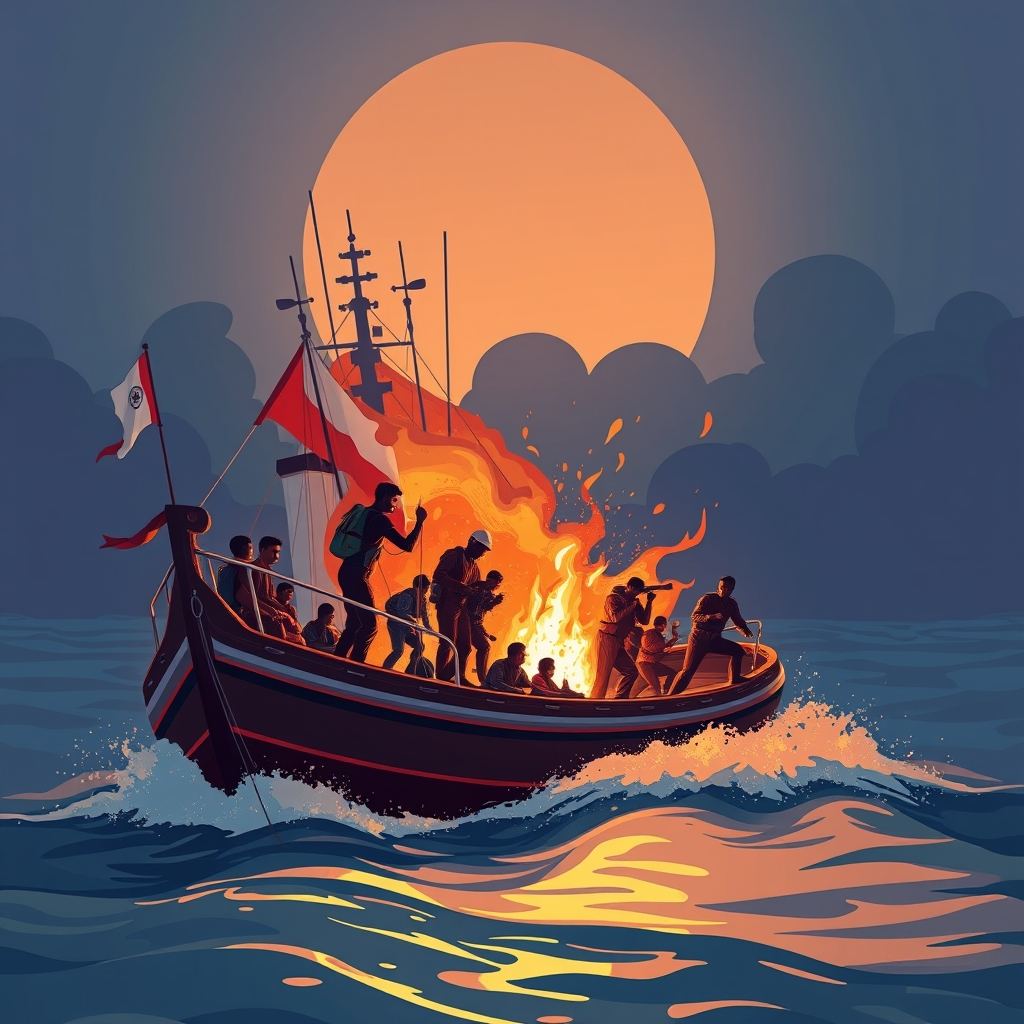
Article: French coastguards rescued 157 migrants from a burning boat in the English Channel on Tuesday, August 4, 2026. The three-ship operation near Boulogne-sur-Mer shows how a routine crossing can become a life-or-death emergency in seconds, and why faster detection matters.
AI-driven eyes on the water
The Channel is one of the world’s busiest sea lanes, yet its narrowness and heavy traffic attract small, overloaded vessels. Today’s monitoring relies on radar, visual patrols and occasional aerial sweeps. Those tools can spot a boat, but they often miss early signs of distress – a flickering light, a sudden change in course, or a faint plume of fuel.
Machine-learning algorithms trained on historic traffic patterns flag anomalies in real time. An AI system that ingests radar returns, AIS (Automatic Identification System) signals and satellite imagery raises an alert the moment a vessel deviates from a known route or slows dramatically. Because the model learns continuously, it adapts to new smuggling tactics without waiting for a human to rewrite rules.
How AI could have changed the rescue
In the Boulogne-sur-Mer incident, the fire was reported only after the vessel was already ablaze. An AI-enhanced surveillance feed could have highlighted the boat’s abnormal speed and proximity to shore hours earlier, prompting a pre-emptive dispatch of a rescue cutter.
Beyond detection, AI can streamline coordination. A decision-support platform ingests the alert, calculates the nearest available assets, and suggests optimal interception points based on tide, wind and traffic density. The platform also broadcasts a unified picture to coastguard ships, local authorities and nearby civilian vessels, cutting the time spent reconciling conflicting reports.
If the system had been in place, the five people rescued earlier that day might have been joined by a larger rescue effort sooner, potentially limiting the fire’s spread and easing the burden on medical teams ashore.
Stakes for Europe and beyond
Human lives are the most immediate concern. Each year, dozens of boats in the Channel catch fire, capsize or run aground, often with tragic loss of life. Faster AI-driven alerts could shave minutes off response times, a difference that can mean survival.
Security agencies also benefit. Early identification of suspicious vessels gives authorities a chance to intervene before smugglers reach the coast, reducing the incentive to use dangerous boats. A single rescue operation – three ships, fuel, medical care and processing – costs hundreds of thousands of euros. An AI system that prevents or mitigates incidents can cut those recurring expenses.
Internationally, the Channel’s challenges echo in other migration corridors, from the Mediterranean to the Bay of Bengal. Proving that AI improves safety here may spur similar investments elsewhere, raising the overall standard of maritime rescue.
Concerns and limits
Deploying AI is not without drawbacks. Training models requires large datasets, some of which contain sensitive vessel movements. Critics warn that constant monitoring could infringe on privacy or be misused for broader surveillance.
False positives pose another risk. An algorithm that flags every deviation could flood operators with alerts, desensitizing them to genuine emergencies. Tuning the system to balance sensitivity and specificity demands continuous human oversight.
Cost is also a factor. While AI platforms can reduce long-term expenses, the upfront investment in sensors, computing infrastructure and staff training can be steep for smaller coastguard services. Budget constraints may force agencies to prioritize traditional equipment over experimental software.
What to watch
European maritime authorities have begun pilot projects that pair satellite data with AI analytics. Success in those trials could lead to a broader rollout across the Channel and neighboring waters.
Regulators are likely to issue guidelines on data sharing, ensuring that commercial satellite operators, navies and coastguards can collaborate without overstepping legal boundaries.
Finally, the humanitarian community is pushing for protocols that guarantee rescued migrants receive timely medical care and fair processing, regardless of the technology used to locate them. Any AI system will need to integrate with those existing procedures.
In sintesi: L'IA può trasformare un soccorso caotico e reattivo in una risposta coordinata e preventiva, ma la tecnologia deve essere implementata con salvaguardie per la privacy, l'accuratezza e i costi. La tragedia di Boulogne-sur-Mer potrebbe diventare un catalizzatore per una sicurezza marittima più intelligente e rapida – se i decisori politici e i soccorritori agiranno sulla base dei dati.