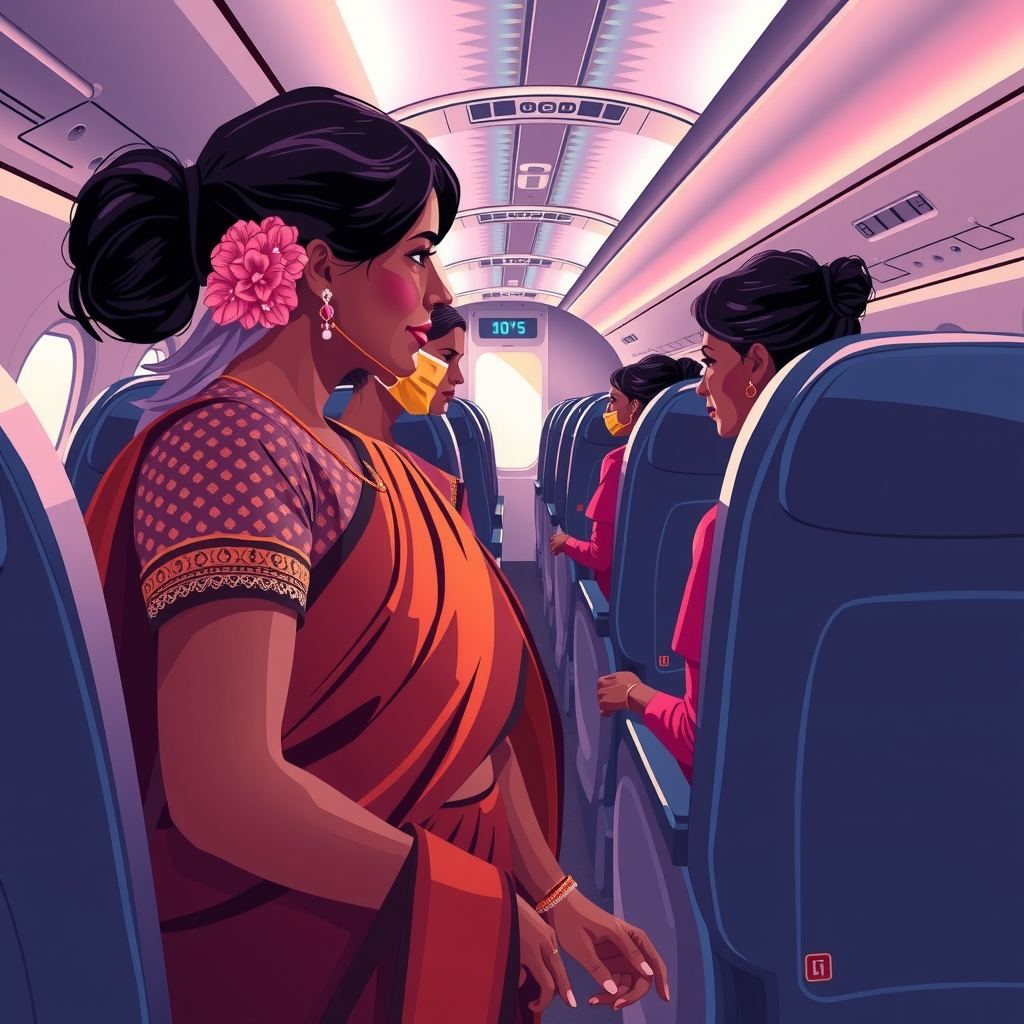
A landmark ruling by a court in Bayonne, France, has officially recognized breast cancer as an occupational disease for aviation professionals. This historic decision sets a transformative legal precedent that could reshape labor rights and occupational health standards across the global aviation industry.
The Landmark Ruling in Bayonne
The legal battle was spearheaded by Sophie Lainault, a former Air France flight attendant and purser who accumulated 12,600 flight hours between 1989 and 2019. After a two-and-a-half-year struggle supported by the French Democratic Confederation of Labour (CFDT), the court acknowledged a direct link between her cancer and her professional environment.
The court specifically cited several high-risk factors: the physiological toll of frequent night shifts, exposure to ionizing radiation at high altitudes, and the historical impact of passive smoking, which was permitted on flights until 2000. Notably, the court found no genetic or lifestyle-related factors that could explain the illness, thereby validating the occupational cause. For Ms. Lainault, the verdict ensures early retirement and full reimbursement for medical treatments from French health authorities.
The Science of High-Altitude Risks
The ruling aligns with growing scientific evidence regarding the health hazards faced by aircrew. A recent study published in JAMA Internal Medicine analyzed nearly 13 million U.S. death certificates between 2020 and 2024, revealing a startling trend. Flight attendants and pilots recorded some of the highest proportions of deaths from radiation-related cancers among 503 occupations studied.
The data suggests that aircrew members are exposed to significant levels of cosmic radiation. According to the U.S. Centers for Disease Control and Prevention (CDC), aircrew accrue an estimated 3 to 6 millisieverts of cosmic radiation annually. This is an order of magnitude higher than the 0.4 millisieverts received by an average passenger taking frequent domestic flights. This cumulative exposure, combined with the disruption of circadian rhythms due to irregular shift patterns, has become a focal point for international labor advocates.
Global Shifts in Occupational Health Law
France is not alone in this shift; Denmark has also officially recognized breast cancer as an occupational disease linked to long-term night work. This movement reflects a broader global recognition of "invisible" occupational hazards—those that do not result in immediate injury but manifest as chronic illnesses over decades of service.
As aviation continues to expand globally, the legal landscape regarding the duty of care owed by airlines to their employees is shifting. The recognition of these risks forces a re-evaluation of scheduling, radiation shielding, and long-term health monitoring for crew members worldwide.
What It Means for India
- Labor Law Reform: Current Indian labor laws do not explicitly address health issues arising from circadian rhythm disruption or long-term night-shift work, suggesting a need for legislative updates to protect the burgeoning workforce in the services and aviation sectors.
- Aviation Industry Standards: As India expands its domestic and international flight connectivity, Indian carriers may face increasing pressure to implement more stringent health protocols and radiation monitoring for flight crews to meet evolving international safety and labor standards.
- Judicial Precedent for Indian Workers: This French ruling serves as a vital case study for Indian legal experts and activists. It provides a framework for how Indian courts might approach complex medical-legal cases involving non-obvious occupational hazards in the modern economy.